There is a particular kind of food city that does not try to impress you.
It does not have a rooftop restaurant with a view. It does not have a chef who trained in Paris. It does not have a menu that changes with the seasons because the seasons, here, are irrelevant. What it has instead are recipes that have not changed since your great-grandmother's grandmother was alive, warung owners who have been cooking the same dish for forty years, and a city full of people who would not dream of eating anywhere else.
Solo, officially Surakarta, is that kind of food city. And for international visitors who find it, it tends to become the culinary highlight of their entire Indonesia trip.
This guide covers everything you need to know: the dishes that define Solo's food identity, the markets you cannot miss, and practical tips to make your culinary journey through this extraordinary Central Java city as seamless as possible.
Why Solo's Food Culture Is Unlike Anywhere Else in Indonesia
Solo's culinary identity cannot be separated from its royal history. As one of the great centers of the Mataram Sultanate, the city developed a court cuisine tradition that eventually filtered down through every layer of Solonese society. This is why you encounter food that feels surprisingly sophisticated even at the most unpretentious street-side warung, complex spice layering, patient cooking techniques, and careful attention to balance that most cities reserve for their finest restaurants.
There are three things to understand about Solo's flavor profile before you eat:
The taste leans sweet and gentle. Palm sugar (gula jawa) appears in dishes you would not expect it, not as a dessert note, but as a foundational flavor that softens and rounds everything else. The spicing is layered and harmonious, no single element dominates, and the full flavor of a dish tends to reveal itself slowly, which is itself a kind of pleasure. And the portions are honest and unfussy, Solo is not a city that performs abundance. The food is enough, and enough is exactly right.
Solo's Must-Try Dishes for International Visitors
1. Nasi Liwet, The True Icon of Solo Cuisine
If there is one dish that defines Solo culinary culture for both locals and visitors, it is Nasi Liwet.
The rice itself is the starting point: cooked in fresh coconut milk with bay leaves and lemongrass, it emerges softer, more fragrant, and fundamentally richer than ordinary steamed rice. Served on a piece of banana leaf, it arrives accompanied by areh, a thick, naturally oily coconut cream sauce cooked down slowly until it reaches an almost custard-like consistency, alongside opor ayam (chicken braised in mild coconut spice), telur pindang (eggs slow-cooked in spiced tea water until deep brown and silky), chayote cooked sweet and soft, and a small portion of sambal goreng for contrast.
The most authentic way to experience Nasi Liwet is to eat it where locals eat it: at a warung that opens before dawn, sitting on a low bench beside people for whom this meal is not a cultural experience but simply Tuesday morning breakfast, as it has been for their entire lives.
Where to find it: Nasi Liwet Wongso Lemu on Jalan Teuku Umar in Keprabon is a living institution, open since the 1950s and consistently queued every evening. The experience alone is worth arriving early for.
2. Timlo Solo, The Royal Soup That Deserves Global Recognition
Timlo is one of Solo's most distinctive dishes and, outside the city, one of its least known, which means most of the world is missing out on something genuinely special.
Picture a clear, light soup built on a chicken broth that has been cooked long and slowly enough that the flavor feels clean and deep at the same time. Inside: tender shredded chicken, sosis Solo (a uniquely Solonese sausage made from minced chicken meat wrapped in a thin egg crepe and pan-fried until golden), telur pindang, and carrot. The broth is served separately, poured tableside from a small pot.
Everything about Timlo runs counter to the expectation many international visitors bring to Indonesian food, it is not fiery, not coconut-heavy, not overwhelming. It is elegant, warm, and precise. It is also the kind of dish that makes you want a second bowl before you have finished the first.
Where to find it: Timlo Maestro inside Pasar Gede is the reference point, the queue that forms every morning is the only review you need. Arrive before 9 AM.
3. Soto Gading, Solo's Golden Bowl
Every Indonesian city has its own soto. Solo's version is Soto Gading, named after the area it originated from, and it stands as one of the finest expressions of this national dish.
What distinguishes Solo's soto from its many regional cousins is the broth: clear, golden-yellow from turmeric, with a clean freshness from ginger and lemongrass that feels simultaneously light and deeply satisfying. The contents include hand-shredded free-range chicken, rice vermicelli, bean sprouts, and celery leaves. It is served with white rice or compressed rice cake (ketupat) on the side, and accompanied by your choice of perkedel (potato fritters), fried tempeh, or sate usus (grilled chicken intestine skewers, for the adventurous).
Where to find it: Warung Soto Gading on Jalan Brigjen Sudiarto opens early and runs until sold out, which is usually before noon.
4. Selat Solo, Java's Most Fascinating Colonial-Era Dish
Selat Solo is the most singular dish in the Solo culinary repertoire, and the one that tends to generate the most curiosity among international visitors who encounter it for the first time.
This dish was born from the encounter between European colonial cooking and Javanese taste during the Dutch colonial period. Its name derives from the Dutch (some trace it to slavink, others to sla, meaning salad). Its appearance resembles something from a European bistro: sliced beef cooked until tender in a dark reddish-brown sauce, served with boiled potatoes, carrots, green peas, a hard-boiled egg, and fresh lettuce leaves.
But the sauce is entirely Javanese, sweet, faintly sour, layered with spice in that characteristically Solo way. The result is a dish that belongs to nowhere else on earth: European in structure, Javanese in soul, and Solo in execution.
Where to find it: Selat Mbak Lies in Keprabon is the most frequently cited landmark for this dish, over four decades of consistent quality.
5. Serabi Notosuman, A Pancake That Has Never Needed to Change
Serabi is a traditional Javanese pancake that predates modern cooking equipment by centuries. Serabi Notosuman is the version that became a city landmark.
Made from rice flour, fresh coconut milk, and a pinch of salt, each serabi is cooked individually in a small clay pan over charcoal, a technique that creates a thin crispy edge and a soft, slightly custardy center, with a subtle smoky-caramel aroma that no modern cooking method has successfully replicated. It comes in two varieties: original (pure white, with the clean fragrance of fresh coconut) or chocolate (with a light cocoa or mocha flavoring).
There are no elaborate toppings. There are no seasonal variations. There is only a serabi that is perfect, wrapped in banana leaf, and best eaten immediately while still warm.
Where to find it: Jalan Notosuman (now Jalan Mohammad Yamin) is where the tradition is concentrated. Ny. Handayani Serabi Notosuman is the name most associated with the gold standard, expect a queue regardless of what time you arrive.
6. Tengkleng,The Bone Soup That Became a Legend
Tengkleng has one of the most compelling origin stories in Solo's culinary history.
In an earlier era, goat meat was food for the nobility. The bones, still carrying fragments of meat, cartilage, and marrow, were what the working class cooked with, simmered long and slowly with an aromatic blend of turmeric, coriander, ginger, lemongrass, and kencur (aromatic ginger). The result was a clear, golden-yellow bone broth of extraordinary depth, where the pleasure lies in extracting the marrow with your fingers, gnawing the last traces of meat from the bones, and drinking a broth that somehow tastes richer than anything that began with prime cuts.
Tengkleng is a dish that rewards complete engagement. Eating it correctly is an entirely hands-on, joyfully messy experience.
Where to find it: Tengkleng Bu Edi at Pasar Klewer is the most celebrated version in Solo, open from midday and usually sold out before late afternoon. Arrive early.
7. Gudeg Solo vs Gudeg Yogya, Yes, There Is a Difference
If you are traveling to Solo after spending time in Yogyakarta, you have likely already encountered gudeg, the slow-cooked young jackfruit dish that is Central Java's most iconic food export. Solo's version, however, is distinct enough to justify trying again.
Gudeg Solo tends toward the dry style (gudeg kering): the young jackfruit is cooked longer, resulting in a darker color, denser texture, and a more concentrated, intensely caramelized sweetness. Yogyakarta's gudeg is typically wetter and saucier. Both are excellent. The difference is worth experiencing side by side.
Where to find it: Gudeg Ceker Bu Kasno is the most talked-about Solo variation, available from the early morning hours, famous for the combination of gudeg served with ceker (slow-braised chicken feet that fall apart completely).
Solo's Essential Food Markets
Pasar Gede Hardjonagoro ,The Grand Market and Its Morning Magic
Pasar Gede is Solo's oldest and most storied market, built during the reign of Pakubuwono X with a Dutch colonial facade that remains one of the most photographed buildings in the city. But for food travelers, the architectural grandeur is secondary to what happens inside every morning.
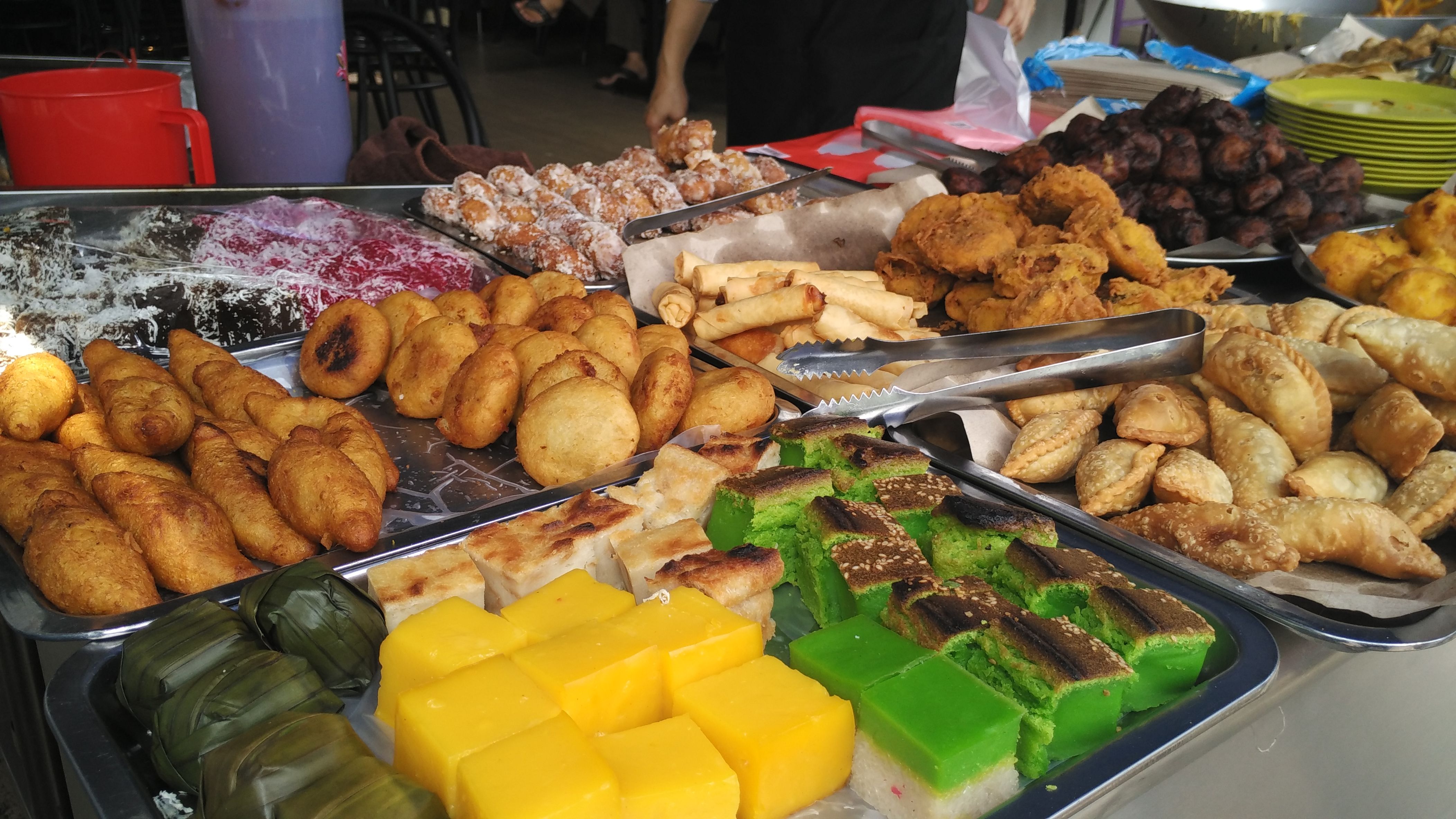
Arrive before 9 AM. You will find: freshly made Timlo served from steaming pots, dawet telasih (a traditional sweet drink made with basil seeds and coconut milk poured over shaved ice), intip (crispy fried rice crust, one of Solo's most unique food souvenirs), an array of traditional fried snacks, and vendors who have held the same spot in this market for longer than most of their customers have been alive.
Pasar Gede is not just a place to eat. It is a living document of Solo's food history, open every morning.
Pasar Klewer, Batik and Bone Soup
Pasar Klewer is primarily known as Central Java's largest batik trading center, but the streets surrounding it form a food ecosystem of their own. This is where you find Tengkleng Bu Edi, various traditional snacks and crackers, and the kind of casual warung eating that forms the backbone of daily Solonese life.
Galabo (Gladag Langen Bogan), Solo's Night Food Court
If your days in Solo are spent on temples, palaces, and batik workshops, your evenings belong to Galabo, the centralized street food gathering along Gladag, right in the heart of the city. Dozens of Solo food vendors set up nightly in an organized open-air space, offering everything from nasi liwet and sate buntel to tengkleng, various traditional drinks, and desserts.
Galabo is the most time-efficient way to sample a wide range of Solo cuisine in a single evening, and the atmosphere, crowded, lively, entirely local, is part of the experience.
Solo's Essential Snacks and Food Souvenirs
Sate Buntel, minced goat meat wrapped in a thin layer of fat and grilled over charcoal until caramelized and smoky. Specific to Solo, difficult to find authentically elsewhere.
Intip, fried rice crust in large circular discs, crispy and lightly salted. One of Solo's most distinctive food souvenirs and completely unlike anything you can buy at an airport.
Tahok, silken tofu pudding served in a warm ginger syrup, sweet and subtly spiced. One of Solo's most comforting street foods and an excellent introduction to Javanese dessert traditions.
Brambang Asem, boiled vegetables served with a tamarind and palm sugar dressing. One of the most traditional Solonese dishes and increasingly rare to find.
Bolu Rasa / Roti Mandarin, Solo's beloved soft sponge cakes with a light sweetness and iconic packaging. An appropriate food souvenir that travels well.
Practical Travel Tips: Eating Your Way Through Solo
Time your meals correctly. Solo is a breakfast city. The finest dishes, nasi liwet, timlo, soto, are available from before dawn and frequently sell out before noon. Arriving late is the only way to miss the best food.
About spice levels. Solo cuisine is notably mild by Indonesian standards, the dominant flavor profile is sweet and aromatic, not fiery. Sambal is always available separately, giving you full control over heat level.
Language at local warungs. English is rarely spoken at the most authentic local spots. Pointing at what neighboring diners are eating, showing photos on your phone, or using a translation app works perfectly. A smile and terima kasih (thank you) opens every door.
Budget for food. Solo is one of Indonesia's most affordable food cities. A complete breakfast at a local warung runs IDR 15,000–30,000. An evening at Galabo with multiple dishes costs IDR 30,000–60,000 per person.
Food safety. Legendary warungs that have operated for decades maintain high standards, high ingredient turnover and community reputation are self-enforcing quality controls. The warung with the longest queue is almost always the safest and best.
Making Payments Seamless During Your Solo Culinary Journey
Exploring Solo's food scene means moving constantly, from an early morning market to a midday warung, through a batik shopping stop, and into an evening at Galabo. Managing payments across this many stops, across a city where cash has traditionally been king, can slow you down.
For international travelers, DANA makes everyday payments easier while traveling in Indonesia. Visitors can sign up using their overseas phone number and link their international bank card to enjoy smoother transactions throughout the trip,no Indonesian bank account required.
Whether you're settling the bill after a bowl of Timlo at Pasar Gede, buying a stack of Serabi Notosuman to eat warm on the walk back, purchasing intip and traditional snacks for food souvenirs, or paying for a full spread at Galabo at the end of a long day, DANA helps simplify every transaction so you can stay focused on what Solo does best: feeding you extraordinarily well.
Planning to explore Solo and Indonesia's other great food cities? Download DANA before your visit and enjoy a more convenient travel experience from your very first meal.
FAQ, Solo Culinary Guide for International Visitors
What are the must-try dishes in Solo for international visitors? The five essential Solo dishes are Nasi Liwet (coconut rice with coconut cream sauce and chicken), Timlo (Solo's elegant clear chicken soup), Selat Solo (the unique colonial- era beef dish that blends European and Javanese flavors), Serabi Notosuman (the legendary clay-pan rice flour pancake), and Tengkleng (the deeply flavored goat bone soup). Each is specific to Solo and difficult to find authentically elsewhere.
Is Solo's food suitable for visitors who don't eat spicy food? Absolutely. Solo cuisine is one of Indonesia's mildest regional food traditions, the dominant flavor is sweet and aromatic rather than fiery. Sambal is always served separately and is entirely optional, giving you full control over heat level.
Where is the best place to experience Solo's food culture in one visit? Pasar Gede for morning food (Timlo, dawet, traditional snacks), the Pasar Klewer area for midday eating (Tengkleng Bu Edi), and Galabo at night for a concentrated Solo street food experience across many vendors in one location.
When is the best time to visit Solo for food tourism? Mornings are peak time, 6 AM to 9 AM is when the most celebrated dishes are freshest and most available. Solo's food culture follows an early rhythm: the best warung owners start cooking before sunrise, and many sell out before noon.
Can international visitors use DANA to pay at food stalls and markets in Solo? Yes. International visitors can register for DANA using an overseas phone number and link an international bank card, no Indonesian bank account is required. DANA is increasingly accepted across Solo's markets, warungs, and street food areas, making it one of the most practical payment solutions for foreign visitors navigating Solo's food scene.
What food souvenirs from Solo are best to bring home? Intip (fried rice crust), Serabi Notosuman (best eaten fresh but can be packed for short travel), Bolu Rasa/Roti Mandarin (soft sponge cakes that travel well), and various traditional Solo crackers and snacks available throughout Pasar Gede are the most recommended food souvenirs.
Final Thoughts: Solo Is a City That Knows How to Feed You
Solo's culinary culture does not ask for your approval. It does not need a Michelin star or a viral Instagram post or a celebrity chef's endorsement. It has been feeding people extraordinarily well for centuries, and it will continue doing so long after every food trend has come and gone.
The nasi liwet vendor who has been cooking the same recipe since 1950 is not waiting to be discovered. She has already been found, by every Solo resident who lines up before her warung opens, day after day, year after year.
For the international visitor willing to eat where locals eat, at the hours locals eat, and with the patience to let the flavors speak at their own pace, Solo offers one of the most genuinely rewarding culinary experiences in all of Southeast Asia.
Explore the city, trust the queues, eat everything, and let DANA take care of every transaction along the way, so nothing stands between you and the next extraordinary bowl.